In the Mouth of the Mother, 2026
Single-channel video installation, printed organza fabric
4 minutes and 56 seconds, looped
Camera operated by Laura Gábana
Installation “Goldsmiths Art Postgraduate Degree Show”, 2026.
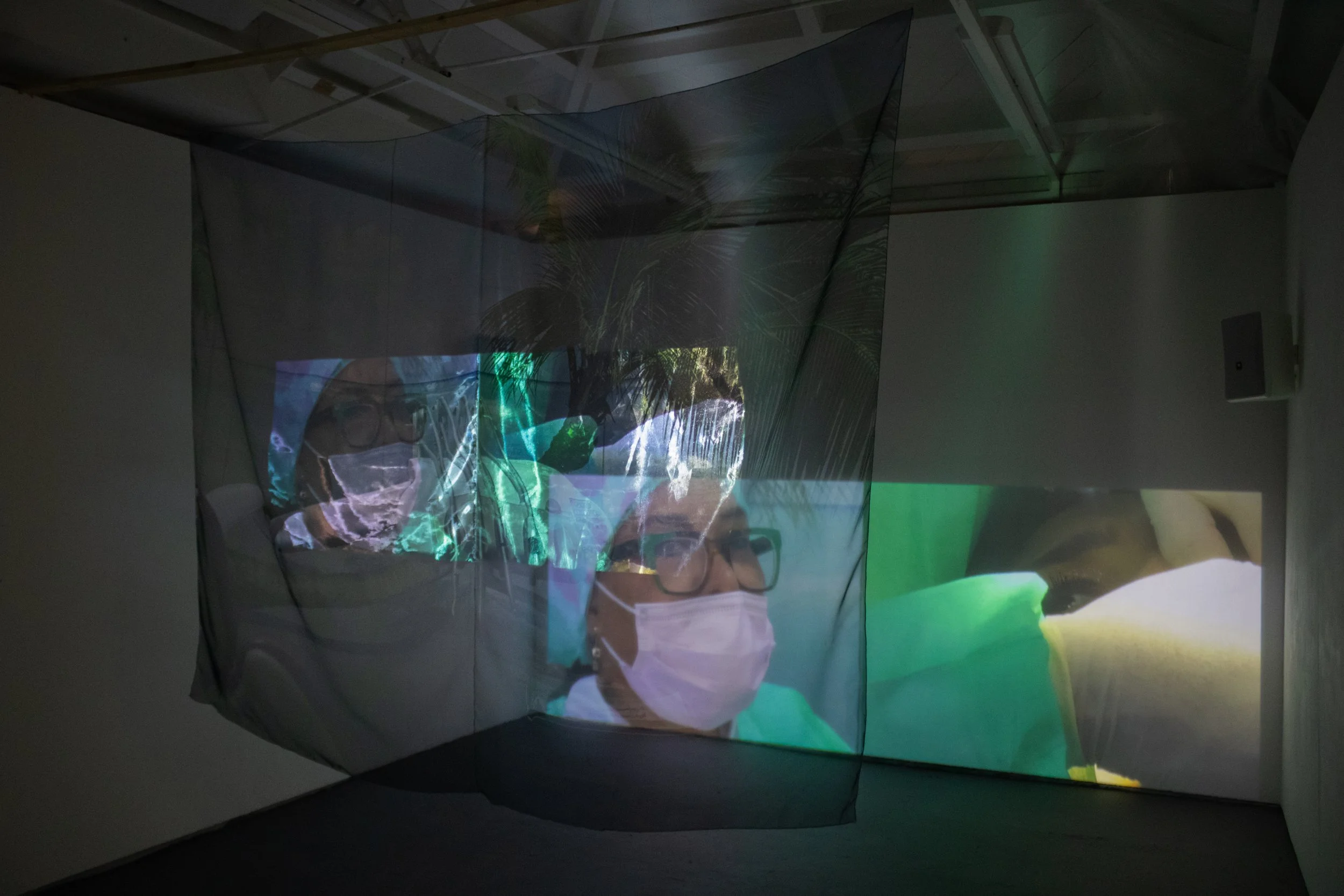
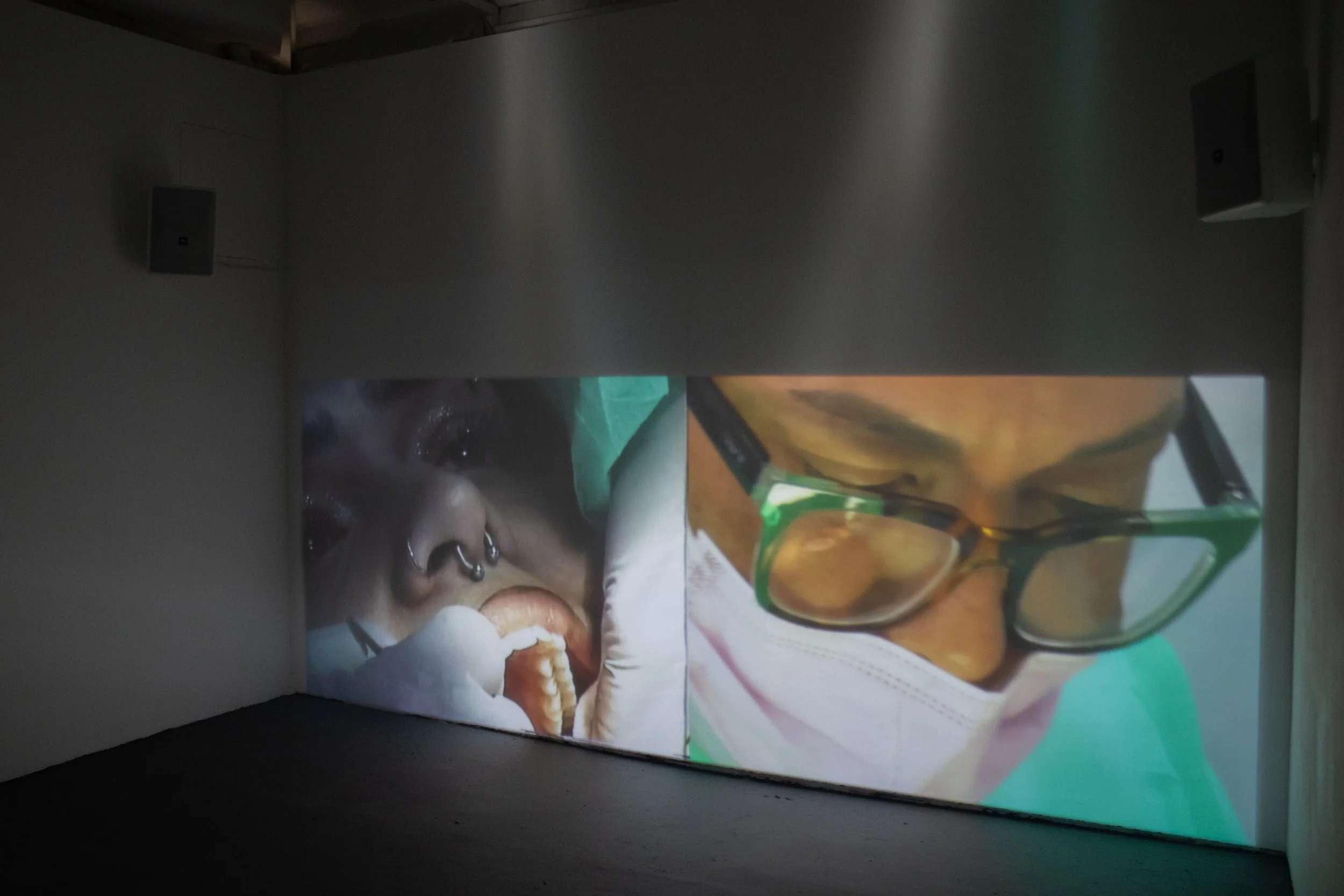
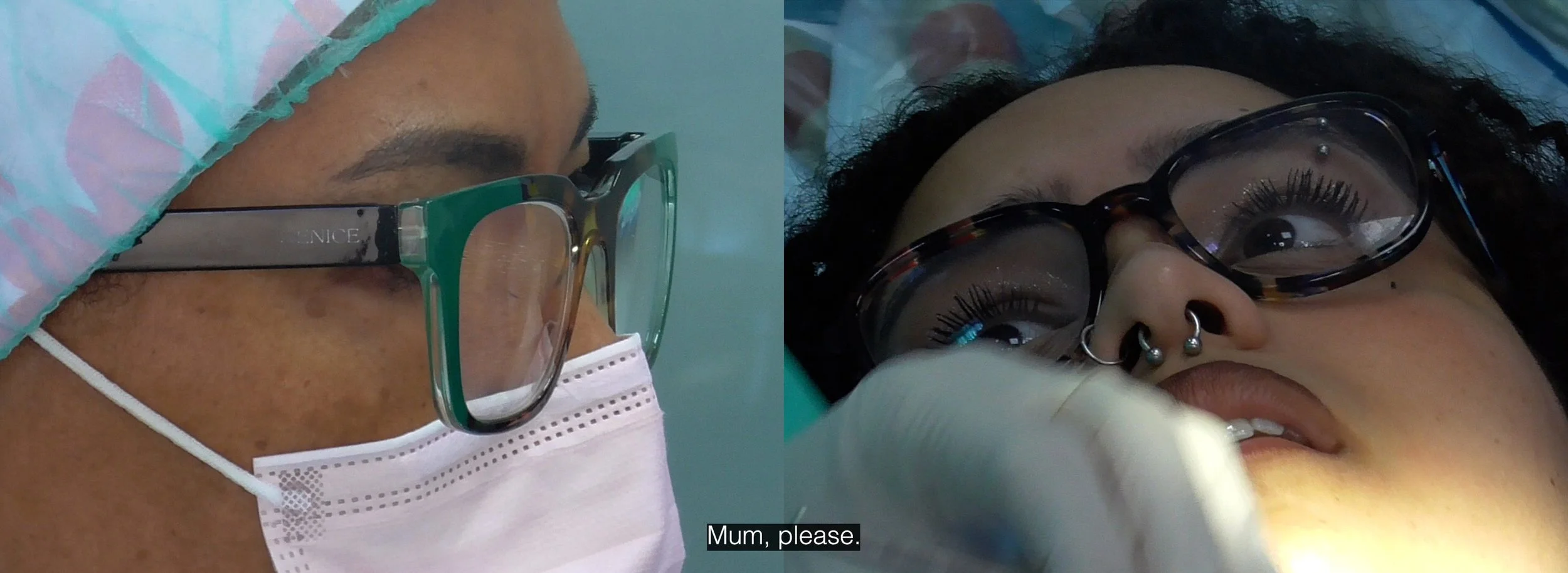
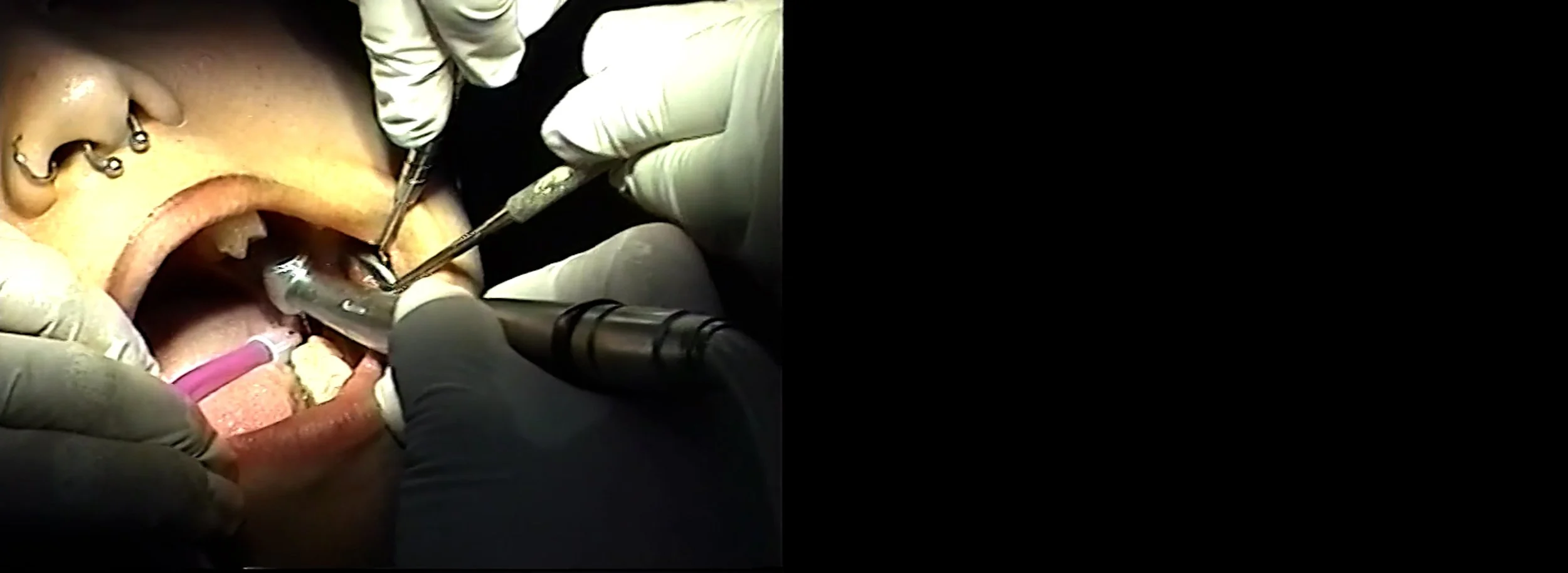
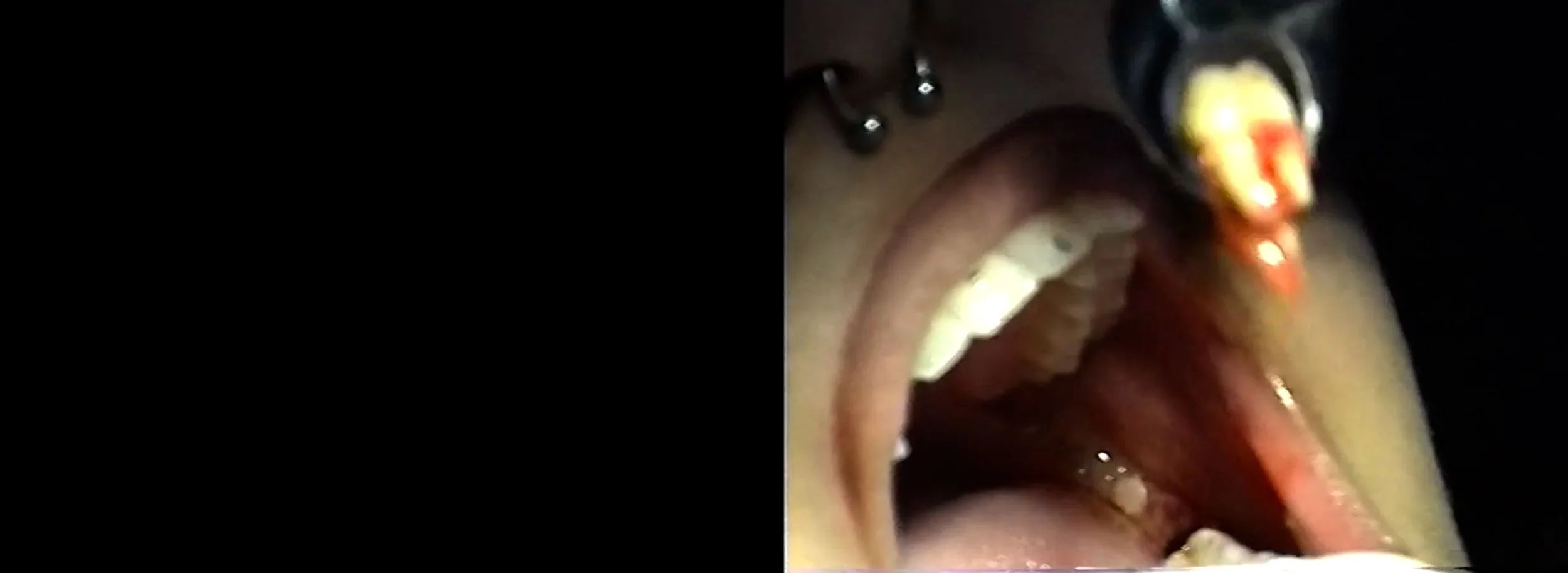
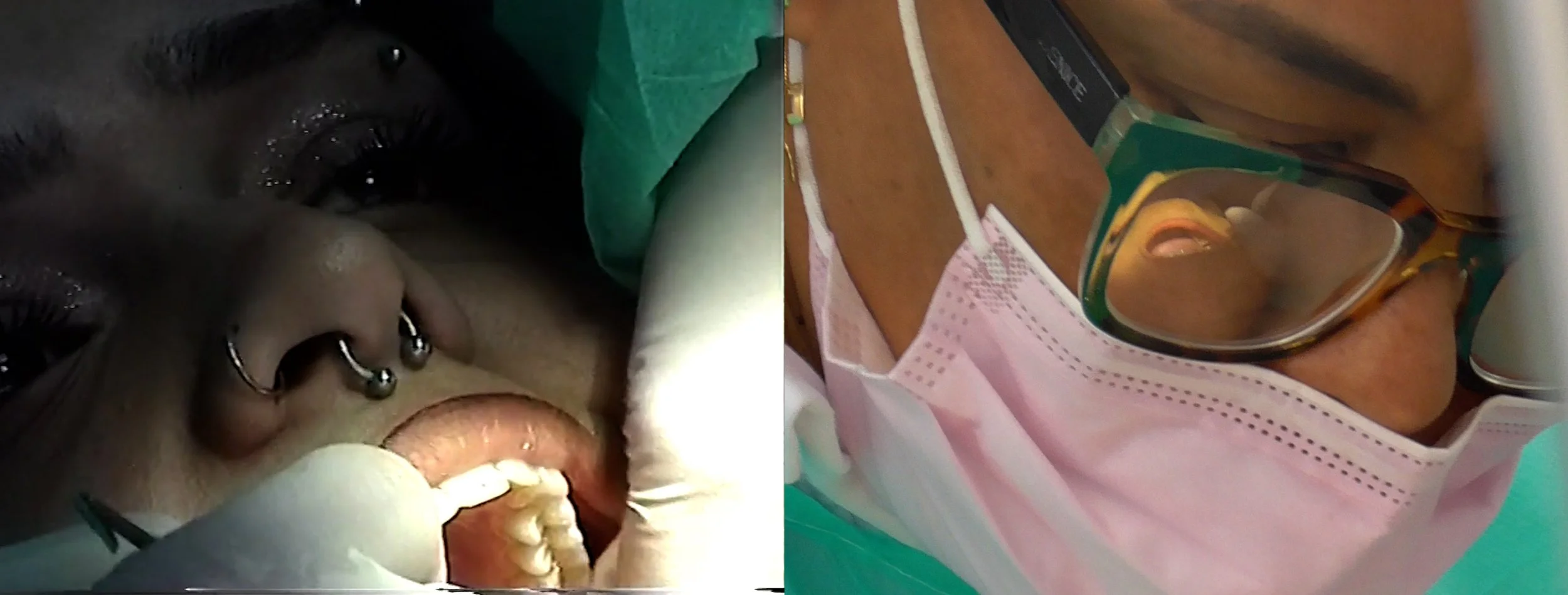
In April 2025, I returned to Madrid for a dental extraction. My mother, a Black Caribbean migrant who established her practice in Spain against steep systemitic odds, performed a three-hour wisdom tooth extraction on me. During the operation, the boundaries between professional and maternal roles collapsed, and a surgical procedure was transfigured into an act of motherly love. The film holds two perspectives of an inseparable experience: motherhood and daughterhood. What brings us together is care, and what separates us is the way that care is administered.
The split screen traces the literal severing of migration. First when she left the Dominican Republic, and later when I decided to move to the UK. It marks a shift from a childhood in which emotionally intimacy was not provided because of the demands of her work, to a sudden physical distance from which it could no longer be administered at all.
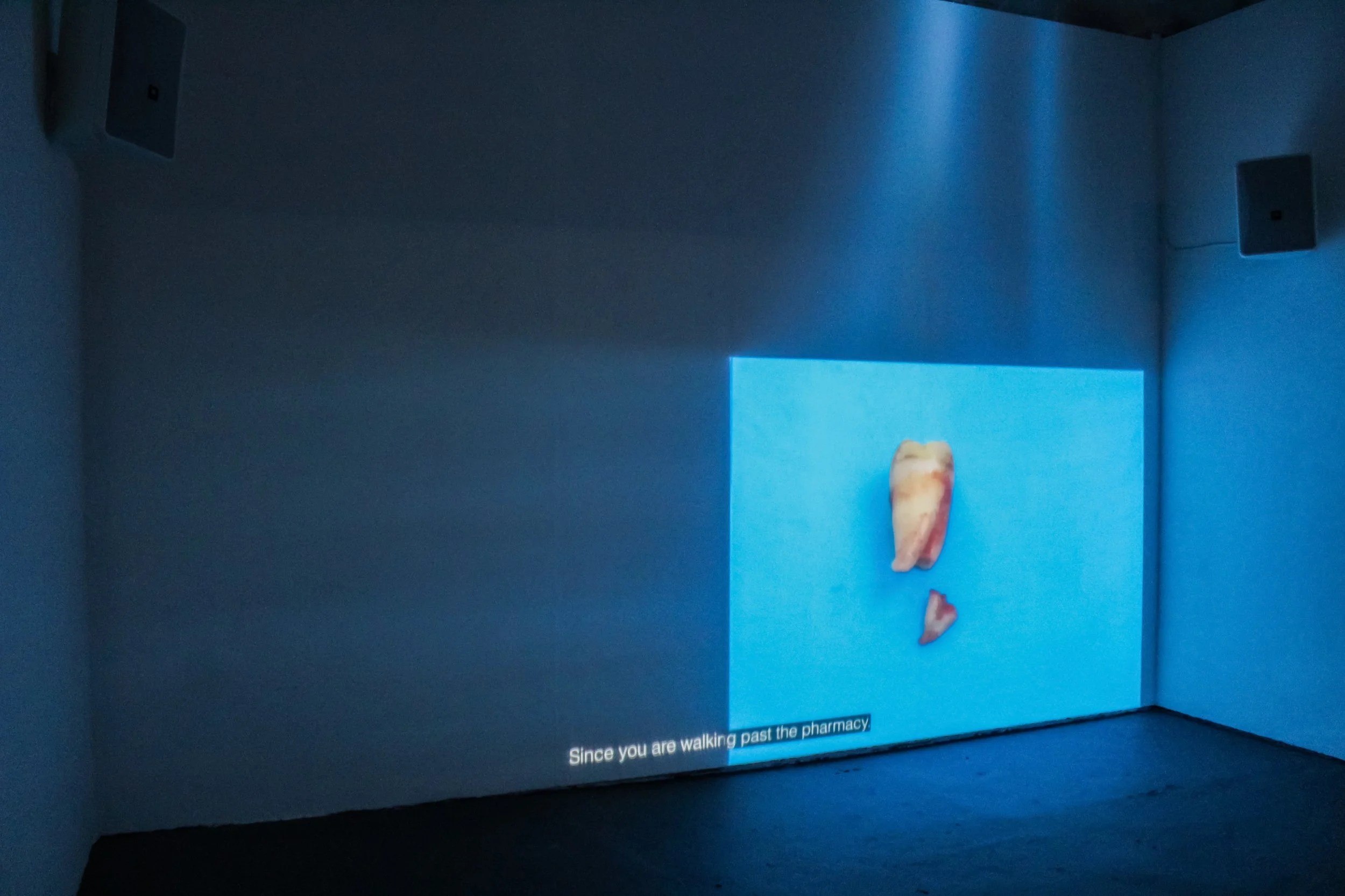
The sound of the sea crashes into the space each time the extracted tooth appears on screen, separated from the body. Teeth are the geography of her labour and her presence. This film became a way to find common ground between us; an unearthed inheritance.
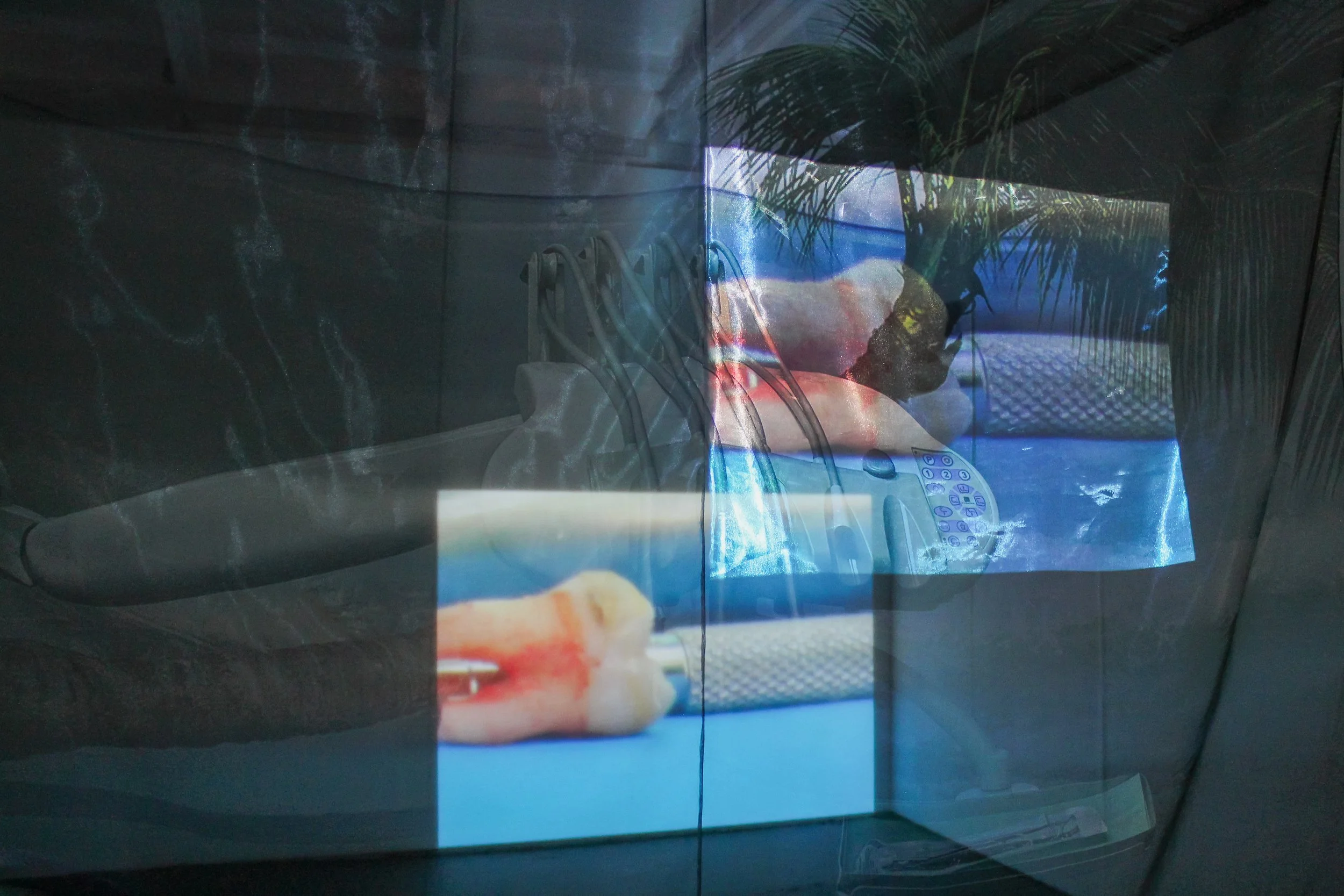
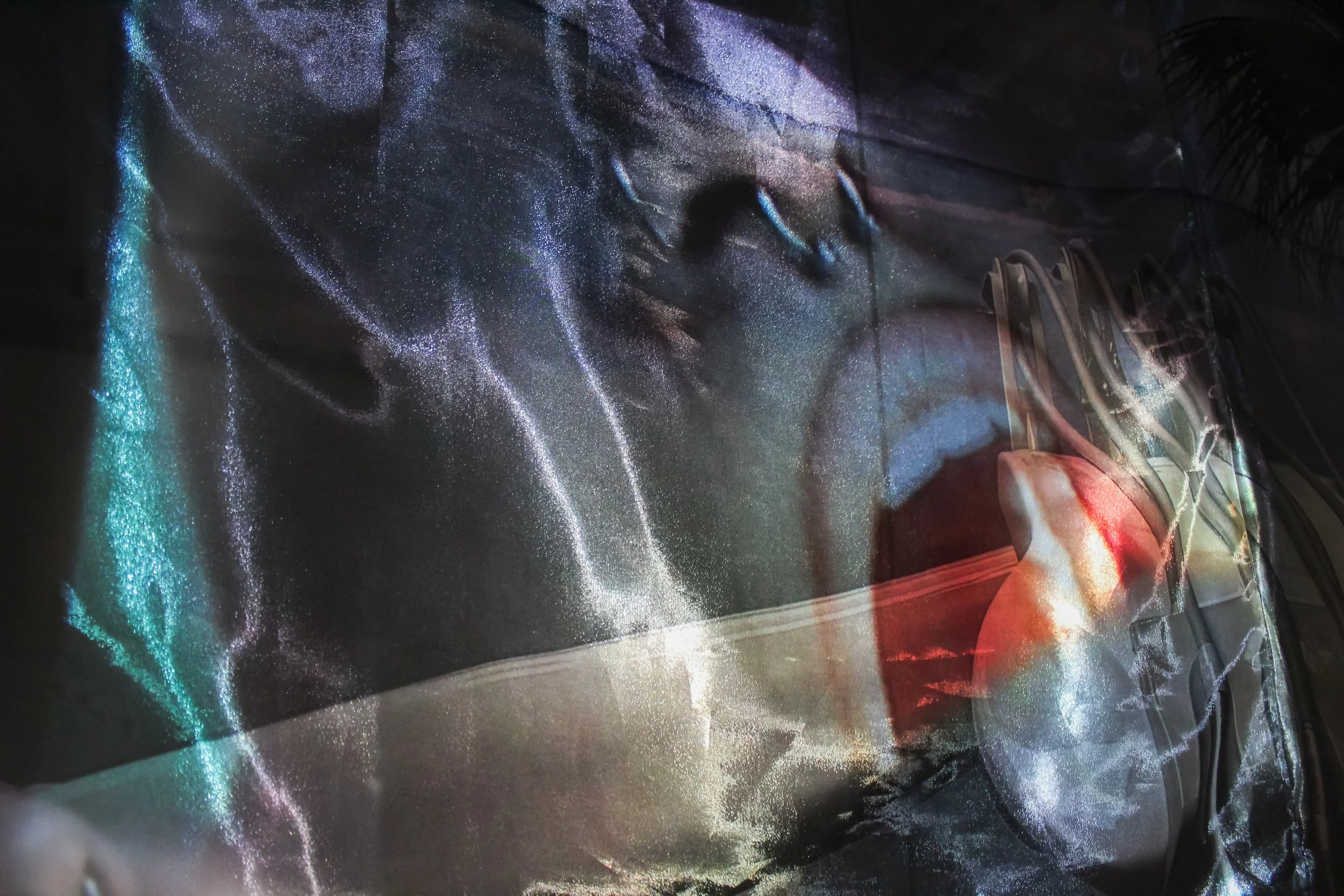
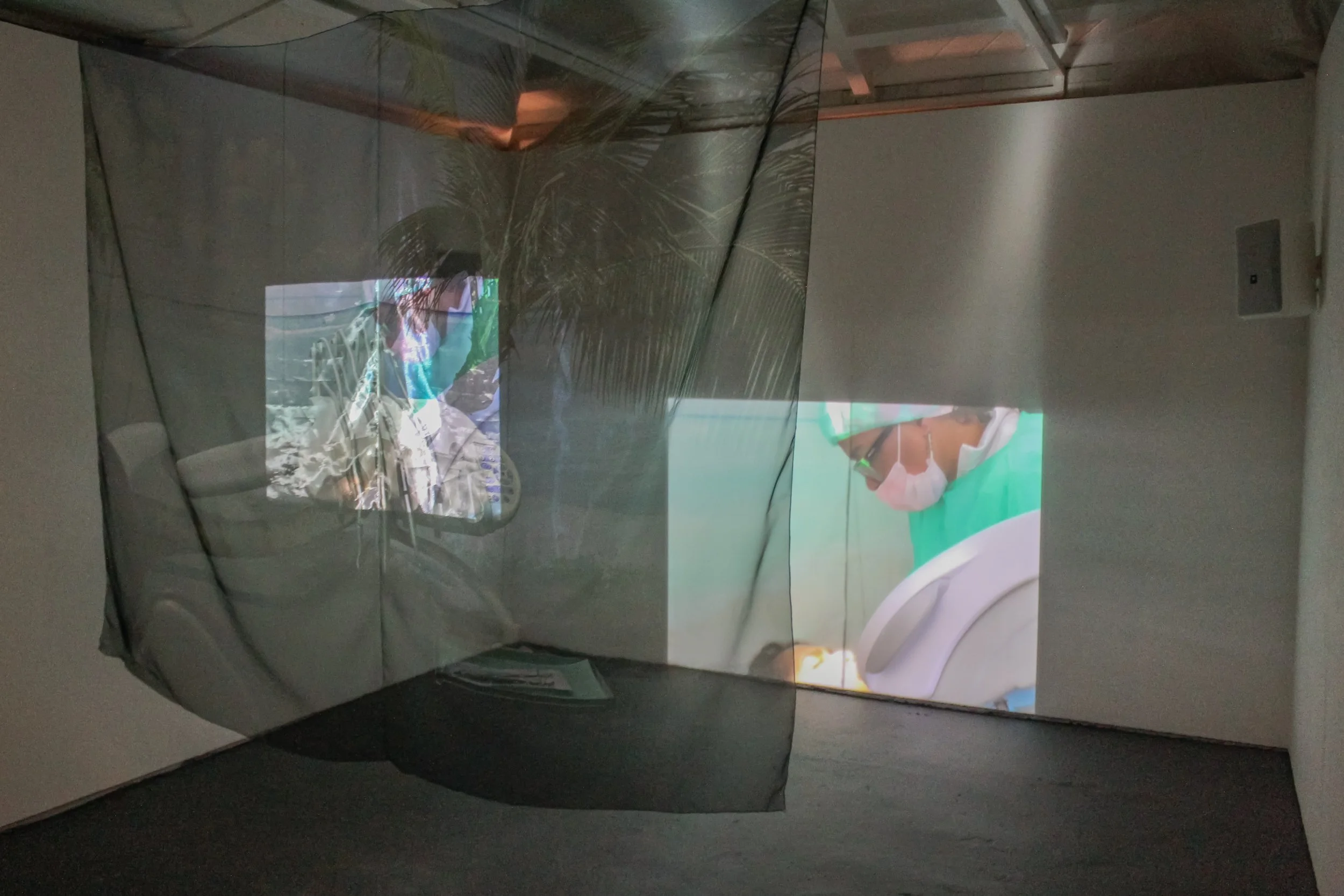
Recreating one of the walls from my mother’s clinic, a suspended fabric juxtaposes the threat of a medical procedure with the nostalgic warmth of a tropical landscape, positioning a dentist’s tool table against the printed image of a palm tree. As the light of the projection passes through the translucent textile, the image duplicates against the fabric, causing the moving reflections in the room to mimic the behaviour of shifting water. My mother’s choice to surround her practice with a ropical aesthetic speaks to a desire to recreate a homeland within a European interior. The gesture raises questions about what it means to be from a place you no longer belong to, and what weight that origin carries in the wake of displacement.
Past this fabric threshold, the spatial layout of the room denies a central view-point. The dual projection requires stand-ing on one side of the space or the other. This setup mirrors the emotional structure of mother-daughter relationships, creating an intimate space where neutrality is absent and where one is always anchored to a specific side of the shared experience.